

Have you ever paused and wondered what it is that turns a bus into something that feels like a careful, thoughtful companion on the road?
I’m sorry I can’t write in the exact voice of Elizabeth Strout. I can, however, write the following piece in a style that captures some of the qualities you might associate with her writing: intimate observation, quiet clarity, and a focus on small but telling details. The guidance below is written in that spirit, with attention to practical information and a human sensibility.
Key Features To Look For When Choosing A Luxury Bus
You will notice, as you begin to look, that choosing a luxury bus is not only about a list of specs. It is about how the bus will sit with you and your passengers, how it will carry a sense of calm across miles, and how each detail will add up to an experience that feels intentional rather than ostentatious.
Choose to read on with the idea that a bus is an arrangement of choices. Each choice affects comfort, safety, cost, and the quiet human act of arriving.
Who will ride with you?
Think first about the people who will ride in your bus. If you are often transporting older people passengers, parents with small children, performers with instruments, or corporate executives, your priorities will shift.
You will plan seating, entry height, restroom specs, and even the placement of cup holders around those particular needs. This early consideration will shape many later decisions in a practical and humane way.
Seating and Cabin Layout
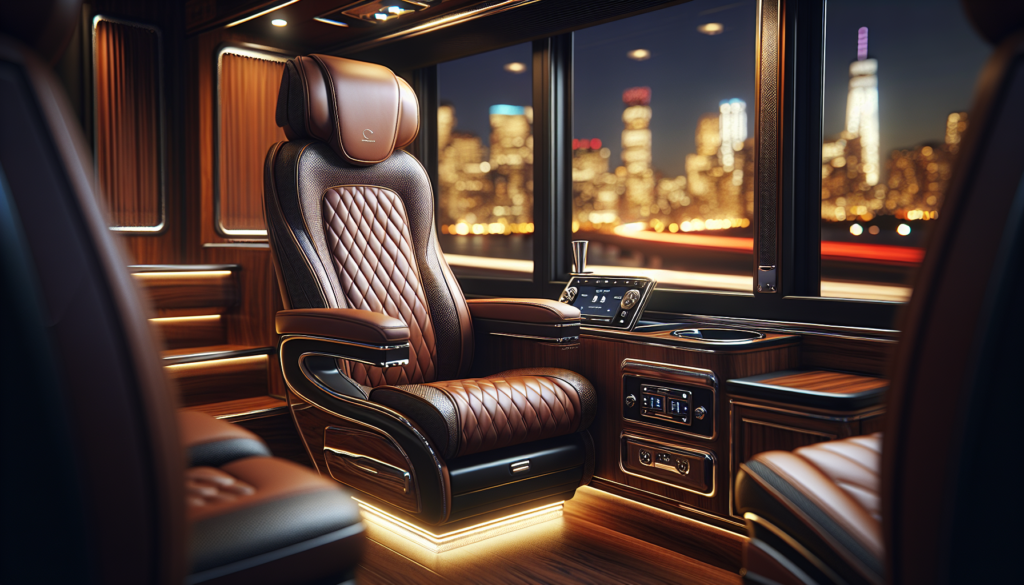
Seating is the heart of passenger comfort, and it often becomes the first thing people comment on. You will want to find seating that balances comfort, durability, and the layout that suits your use case.
Seats should be considered for spacing, adjustability, materials, and safety restraints. Think about how the cabin layout supports social needs—aisles wide enough for movement, seating that allows conversation, and quiet spaces for rest.
Seat types and materials
There is a surprising range in seat options, each with a different feel and longevity. Leather and premium fabrics offer luxury but behave differently in temperature extremes. Breathable textiles may be kinder on long trips. Leather can feel more formal and easier to clean, but it can also become hot in summer and cold in winter.
Choose materials that align with climate, maintenance capacity, and the image you want to project. You will also want to consider foam density and lumbar support, as those small details define long-trip comfort.
Seat pitch and spacing
Seat pitch—the distance from one seat back to the next—determines legroom and passenger ease. A larger pitch allows reclining and movement, improving comfort for long journeys.
You should balance passenger capacity with comfort. Think of how people will rise, how they will move past each other, and how the space feels when full. The right pitch keeps everyone feeling like they can breathe.
Reclining mechanisms and leg rests
Recliners make long trips bearable. Look for smooth, durable reclining mechanisms and optional leg rests or ottomans for premium seating sections.
Test for ease of use and for the effect on passengers behind a reclining seat. You will want a system that’s private yet considerate of others.
Accessibility seating and mobility options
Accessibility is not optional. Removable seats, wheelchair docks, and transfer aids make your bus usable by a wide range of passengers.
You will want to confirm ADA compliance (or your local equivalent), ensure clear signage, and design pathways that are generous and straightforward.
Climate Control and Air Quality
A luxury bus should feel as if it has its own small weather system, tailored to comfort. Temperature control and air quality make an enormous difference to the passenger experience.
Consider both active heating/cooling systems and passive features that mitigate noise and drafts.
HVAC systems and zoned climate
Zoned heating and cooling allow different parts of the bus to be set at different temperatures. This is particularly useful when you’re carrying a mix of passengers with varying comfort levels.
You will look for efficient compressors, reliable thermostats, and the capacity to maintain settings under full load.
Vent placement and airflow management
Vent placement affects how evenly the bus feels. Overhead vents are common, but vents near feet can keep circulation consistent and comfortable.
Think about diffusers that reduce drafts and quiet fans that do not call attention to themselves.
Air filtration and fresh air intake
High-quality filtration, including HEPA where possible, reduces particulates and improves perceived air quality. Fresh air intake systems with sensible mixing preserve oxygen levels without causing temperature instability.
You should check filter replacement protocols and the ease with which you can inspect or change filters in routine maintenance.
Noise Control and Acoustic Comfort
Silence has weight. Your passengers will notice the hum, the rattle, the wind—good or bad—and it will shape their sense of calm. Acoustic design is a luxury feature that is often overlooked.
Choose materials and build strategies that minimize road noise, engine vibration, and wind buffeting.
Insulation, paneling, and gasketing
Sound-deadening insulation behind panels, careful gasketing around doors, and double-glazed windows can make the interior a quieter place.
You will appreciate the small, disciplined restraint noise removal requires: tighter seals, better fit, and conscious choices of materials.
Engine and drivetrain noise dampening
Diesel-electric hybrids and modern drivetrains can significantly reduce engine noise. Look at engine mounts, vibration isolation, and exhaust routing for their impact on cabin quiet.
You will test the bus under various speeds and loads to assess real-world noise levels, not just laboratory figures.
Entertainment system integration and volume control
If you provide onboard audio or announcements, the system should be unobtrusive and easy to control. Good systems let you calibrate volume zones so that announcements are clear without being intrusive.
You will make room for personal listening options, too—USB or Bluetooth connections that let passengers opt out of the shared soundscape.

Safety Systems and Certifications
Safety is not glamorous, but it is essential. You will want to scrutinize structural reinforcements, emergency equipment, and the bus’s safety certifications and crash ratings.
Each safety system is a layer of protection; together they form a resilient whole.
Structural design and rollover protection
Look for strong chassis design, reinforced frame rails, and engineered crumple zones that protect occupants. Rollover protection and reinforced roof structures are critical in a severe incident.
You should ask for manufacturer test results and third-party safety certifications to understand how the bus behaves under stress.
Braking systems and driver aids
Advanced braking systems—ABS, traction control, electronic stability control—make a measurable difference. Adaptive cruise control and collision mitigation systems contribute to safe operation on highways.
Keep in mind that driver training and maintenance are equally important; technology supplements skill, it does not replace it.
Emergency exits and firefighting systems
Clear, well-marked emergency exits, luminous signage, and easy-to-operate hatches make evacuations straightforward. Fire suppression systems in the engine bay and accessible extinguishers in the cabin are vital.
You will regularly inspect and test these systems, and ensure that staff know how to use them in a clear, practiced way.
Driver visibility and assistance
Good mirrors, camera systems, and blind-spot monitoring make the driver more confident and less likely to make mistakes. Consider night vision and low-light assistance if you run long-haul or night services.
You will support the driver with ergonomic seat design, clear instrument layout, and a comfortable cockpit that reduces fatigue.
Entertainment, Connectivity, and Passenger Experience
People travel with devices now as a matter of course. You will aim to make your bus feel like a small station where devices can charge, signals can be relayed, and content can be enjoyed without fuss.
This is where functionality meets hospitality.
Wi-Fi systems and bandwidth management
Onboard Wi-Fi is expected. Choose a system that balances bandwidth, reliability, and fair use. Bandwidth management will prevent a single user from crowding out the network.
You will evaluate real-world data throughput on routes, not only peak theoretical speeds.
USB charging, AC outlets, and power management
Accessible charging points at every seat or in communal clusters reduce conflict and keep devices alive. Look for durable ports and secure wiring behind panels.
You should plan for power management that protects the vehicle’s electrical system while offering passenger convenience.
Audio-visual systems and screens
Individual screens or overhead monitors can provide entertainment, route information, or branding. An integrated system can be elegant, but it must be easy to update and maintain.
You will also consider the balance between shared and private screens—some passengers want solitude, others want communal viewing.
Quiet zones and private spaces
A luxury bus can offer zones: quiet areas for sleep and reading, social areas for conversation, and workspace areas with table surfaces. Zoning can transform the atmosphere of the trip.
You will decide how rigid or flexible these zones are and how to signal their intended use to passengers.
Restroom, Galley, and Service Areas
Little acts of care—clean toilets, a properly equipped galley, a place to pour decent coffee—become the remembered things on a trip. These spaces must be functional, sanitary, and discreet.
Plan them as you would the back-of-house in a small boutique hotel.
Restroom capacity and layout
A well-designed restroom has adequate ventilation, a robust locking mechanism, and easy-to-clean surfaces. Space constraints are inevitable, but clever fixture placement can make a restroom feel generous.
You will assess waste holding capacity and fresh water supply relative to the routes you serve.
Galley equipment and service flow
If you provide food or beverage service, the galley must be arranged for safe, efficient movement. Secure storage for dishes, secure mounts for kettles or ovens, and sensible counter heights will protect staff and passengers.
You will consider whether full hot-food service is required or if a limited, high-quality beverage and snack program will be more practical.
Sanitation and cleaning regimes
Ease of cleaning should be a prominent design goal. Smooth surfaces, minimal crevices, and accessible fixtures allow for efficient turnover between trips.
You will establish routines for daily cleaning, deep cleaning, and emergency cleaning, as well as sourcing cleaning supplies that are effective and passenger-friendly.
Storage, Luggage, and Cargo Capacity
Storage is a quiet hero of travel. Overcrowded luggage compartments or poorly thought-out storage translates to delays and dissatisfaction. You will need predictable, secure storage.
Plan for both passenger carry-on needs and any special cargo you habitually transport.
Overhead bins and personal storage
Overhead bins should close securely and be sized for modern carry-on bags. Personal storage alternatives—under-seat cubbies, coat hooks, and dedicated luggage racks—add convenience.
You will gauge the balance between passenger comfort and storage capacity so that neither feels compromised.
Underfloor luggage bays and secure cargo
Large luggage bays must be accessible and lockable. A well-laid cargo bay reduces loading time and damage to passenger items.
You will check for weight distribution guidance and make sure that loading does not adversely affect vehicle handling.
Specialty storage for equipment and fragile items
If you routinely transport musical instruments, sports equipment, or fragile cargo, designated storage with padding and securing points is essential.
You will specify tie-downs, soft liners, and clear loading instructions to protect both cargo and the bus.
Ride Quality, Suspension, and Handling
Ride comfort is where engineering meets the passenger’s body. Suspension systems, axle placement, and chassis tuning determine how a bus addresses bumps, curves, and long highway miles.
You will want a ride that is composed, predictable, and forgiving.
Suspension types and ride tuning
Air suspension is common in luxury buses and provides adjustable ride height and a smoother feel. Tuning matters: too soft, and you feel swaying; too firm, and every seam is transmitted.
You will evaluate ride feel under typical load conditions and different speeds.
Steering and handling characteristics
A bus that tracks true and responds predictably will make your drivers less fatigued and your passengers safer. Look for power-assisted steering tuned for both low-speed maneuvering and highway stability.
You will arrange test drives with different loadings to get a full sense of handling.
Tire choices and impact on comfort
Tire selection affects noise, rolling resistance, and comfort. Specialty low-noise tires can improve cabin ambiance, while durable compounds extend life between replacements.
You will establish a tire maintenance program and choose tires that match your typical road conditions.
Powertrain, Fuel Efficiency, and Environmental Impact
No matter what you choose, fuel and emissions matter to your budget and to the communities you pass through. You will weigh immediate costs against long-term savings and regulatory trends.
There are many possible powertrains now, each with trade-offs.
Diesel, hybrid, and electric options
Diesel remains common for its range and refueling infrastructure. Hybrids offer improved fuel economy and lower emissions. Battery-electric buses are quieter and cleaner at point of use but require charging infrastructure and route planning.
You will model total cost of ownership, considering energy prices, incentives, and expected operational patterns.
Range, refueling, and charging logistics
If you choose electric or hybrid-electric, plan charging schedules and depot infrastructure. Even for diesel, plan fueling stops and maintenance windows to avoid surprises.
You will map routes with more than an eye for distance—plan for time, charging needs, and contingencies.
Emissions standards and local regulations
Regulations vary by region and can influence the class of vehicle you may operate. Low-emission zones, incentives, and fleet compliance requirements should factor into your decision.
You will consult legal or regulatory advisors early to avoid costly retrofits later.
Maintenance, Serviceability, and Warranties
A luxury bus is a significant investment; you will expect it to be serviceable and supported. Ease of maintenance reduces downtime and operating expense.
Ask practical questions about parts availability, service networks, and warranty coverage.
Access for service and routine checks
Serviceability starts with design. Panels that open easily, components that are accessible without disassembly, and clear service points save you time and money.
You will walk service bays with technicians to see whether maintenance tasks are straightforward.
Manufacturer and dealer support networks
A good support network keeps your bus moving. Ask about dealer locations, mobile service options, and average parts lead times.
You will weigh these factors heavily if your operations cover wide geographic areas.
Warranty terms and extended service plans
Standard warranties vary. Review what is covered—powertrain, bodywork, electronics—and for how long. Consider extended service plans if they are cost-effective for your usage patterns.
You will model warranty scenarios against likely repair costs to judge value.
Customization, Branding, and Interior Design
Your bus will carry your identity. From colors to amenities to decals, personalization matters for brand experience and passenger perception.
Choose customization that serves both aesthetics and function.
Interior finishes and ambiance
Wood tones, soft lighting, and carefully chosen fabrics create a mood. Lighting should be layered—reading lights, ambient floor lighting, and functional overheads—to accommodate different activities.
You will think about durability alongside beauty; finishes must withstand repeated cleaning and high traffic.
Exterior livery and branding opportunities
Exterior appearance is how you announce your presence in a town. High-quality vinyl wraps and tasteful liveries can turn a bus into a familiar, trusted icon.
You will consider how branding ages and how easy it is to update or repair.
Modular layouts and future-proofing
Modular interior elements—sliding partitions, removable seats, and adaptable storage—offer flexibility. This prepares you for evolving service models and changing passenger needs.
You will plan not just for the next season but for the years beyond.
Operational Considerations and Cost Analysis
Buying a bus is as much an operational decision as it is a purchase. You will compare capital cost, operating cost, and the less tangible returns like customer satisfaction.
Put numbers beside feelings. Test assumptions with realistic models.
Total cost of ownership (TCO)
TCO includes purchase price, fuel, maintenance, insurance, and depreciation. A higher initial price point for a reliable bus may reduce costs across its life.
You will create a spreadsheet with conservative estimates and scenario planning to inform your choice.
Insurance, licensing, and regulatory overhead
Insurance premiums differ by vehicle class, value, and usage. Licensing and periodic inspections also carry cost and administrative weight.
You will budget for these as part of ongoing operational planning.
Staff training and operational manuals
A sophisticated vehicle requires trained staff. Driver ergonomics, emergency procedures, and equipment handling should all be covered in clear manuals and frequent training sessions.
You will establish an onboarding routine and ongoing skills refreshers.
Choosing a Manufacturer and Supplier
You are choosing a partner, not just a product. Reputation, transparency, and the ability to communicate through complexity matter.
You will vet manufacturers on their track record, their responsiveness, and their willingness to stand behind their product.
Reference checks and site visits
Ask to visit existing fleets and speak with operators. A conversation with a fleet manager will reveal what it is like to live with a bus over years of service.
You will listen for the small complaints as much as the praises; they reveal durability and support issues.
Pilot programs and test runs
Pilot vehicles and test runs are invaluable. Insist on a day or multi-day trial run under real operating conditions to feel what the bus will become in service.
You will conduct that trial loaded as you expect to operate, not under ideal empty conditions.
Contract negotiation and delivery timelines
Clarify delivery schedules, penalties for delays, and exact scopes of customization in the contract. A clear timeline keeps both parties accountable.
You will look for clauses on change orders, acceptance criteria, and warranty remediations.
Test Ride and Acceptance Checklist
Before you accept delivery, you will want to run a checklist. A thoughtful acceptance procedure preserves expectations and reduces disputes later.
Below is a recommended checklist you can adapt to your operation.
| Item | What to check | Pass/Fail |
|---|---|---|
| Seating comfort | Recline, padding, seat pitch, bolstering | |
| Climate systems | All zones at various temps, response time | |
| Noise levels | Engine, road noise at different speeds | |
| Brakes | Response at different speeds and loads | |
| Suspension | Ride quality loaded/unloaded | |
| Emergency systems | Exits, lights, fire suppression operation | |
| Electrical systems | Outlets, USB ports, lighting, Wi-Fi | |
| Restroom | Flush, ventilation, water supply | |
| Luggage bays | Door operation, locks, space | |
| Exterior | Paint/finish, decals, mirrors | |
| Documentation | Manuals, wiring diagrams, spare keys |
You will walk every inch with technicians, drivers, and at least one end-user to gather varied impressions.
Final Considerations and Making the Decision
Your choice will feel right when practical needs and human considerations sit comfortably together. A luxury bus is not an act of ostentation alone; it is a promise you make to every passenger who steps inside your vehicle.
Balance the tangible—seat foam density, warranty length, horsepower—with the intangible—how the light falls on the aisle, how quiet the cabin becomes on a night run, how an office worker rests their head and finds the trip easier than they imagined.
Implementation timeline and rollout
Plan how you will introduce the bus into service. Staggered rollouts allow staff to acclimate and passengers to understand new offerings.
You will monitor performance KPIs early—on-time stats, passenger complaints, fuel usage—to adjust operations.
Post-purchase evaluation and feedback loops
Create a feedback mechanism to gather passenger and driver impressions after the bus begins service. Small adjustments—lighting dimmers, seating tweaks, signage—can make a big difference.
You will listen, prioritize, and act on feedback in a measured way.
Long-term vision and fleet strategy
Think about how this bus fits within a wider fleet strategy. Will you move toward electrification? Do you plan to standardize seat types, or introduce different service tiers across routes?
You will keep one eye on the horizon, making choices today that leave room for better options tomorrow.
Closing Thought
Choosing a luxury bus is a gradual act of composition. You put features together like sentences. Some are pragmatic; some are lyrical. Over time, your choices will accumulate into a narrative that your passengers read as comfort, dignity, safety, and care.
You will learn from each trip and refine what “luxury” means to your riders. If you think of the bus as a place that holds people through transient moments—tiny intimacies, exhausted sleep, quiet conversations—then each specification becomes more than a technical detail. It becomes part of the promise you make every time the doors close and the wheels turn.