
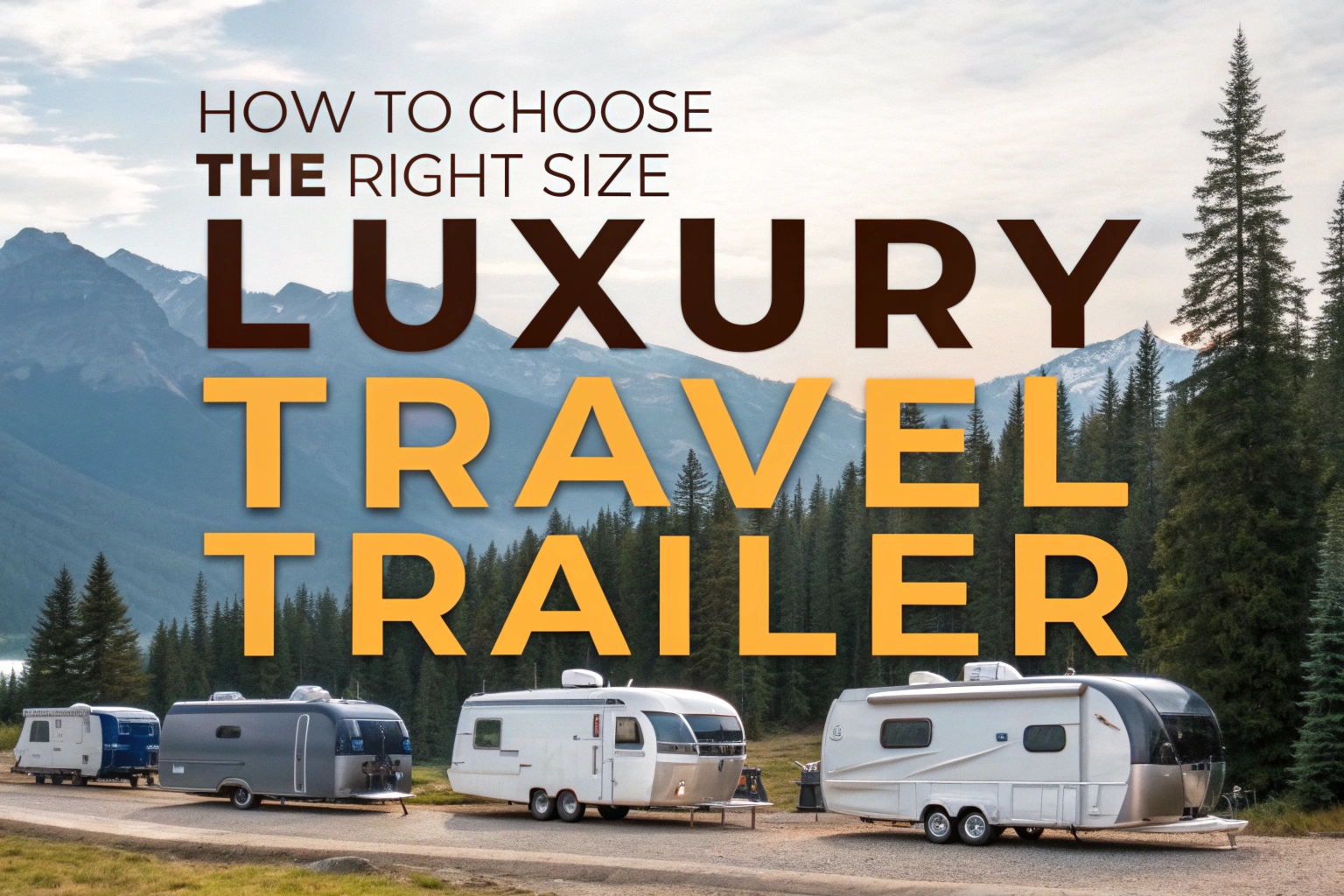
Have you ever imagined how it would feel to pull into a quiet night, unhitch, and step into a space that is entirely yours — more comfortable than a tent, more intimate than a hotel, and beautifully appointed like a small home?
How To Choose The Right Size Luxury Travel Trailer
You are making a choice that will shape many weekends and long trips. It’s not only about measurements on a spec sheet; it’s about how you live, what you tow, and the quiet pleasures of having enough room for a book, an evening meal, and a window that frames whatever landscape you find yourself in. You deserve guidance that is practical and humane, simple and precise. Below you’ll find a detailed, gentle course to help you choose the right size luxury travel trailer for your life.
Start with how you intend to use it
If you’re going to take short weekend escapes, the needs are different from those of someone living full time in a trailer for months. Think about the cadence of your travel — spontaneous weekends, seasonal migrations, long cross-country journeys — and let that inform the size you consider. A larger unit can be a refuge; a smaller one can be freeing.
Consider who will travel with you
You might be traveling solo, as a couple, with children, or with pets. Guests will affect your sleeping arrangements, seating, bathroom size, and storage. Decide the maximum number of people who will travel together on occasion, and design your choice around the largest reasonable scenario.
Understand the relationship between length, weight, and liveability
Length and weight are often the first things people look at, but they’re only part of the picture. Longer trailers typically have more living space and separate rooms, but they also require more towing capacity and present challenges with parking and maneuvers. Weight affects fuel economy, braking distance, and which vehicle is appropriate.
Length categories and what they typically mean
You will see travel trailers described in ranges of length. These descriptions tell you about floorplan possibilities and lifestyle trade-offs.
| Length Range | Typical Layouts | Pros | Cons |
|---|---|---|---|
| 15–20 ft | Compact single-axle units, convertible dinette/bed | Easy to tow, low weight, economical | Limited living space, small bathrooms, less storage |
| 20–25 ft | Small double-axle trailers, dedicated sleep area possible | More room for amenities, improved stability | Still limited living separation |
| 25–30 ft | Mid-size trailers, separate bedroom, full bathroom | Better kitchen, more storage, comfortable living | Requires larger tow vehicle, parking considerations |
| 30–35 ft | Full-featured luxury travel trailers, separate living/bedroom | Spacious interiors, full-size appliances, slide-outs | Heavier, needs powerful tow vehicle, more complex systems |
| 35+ ft | Large fifth-wheel and gooseneck-style luxury trailers | Near-home comforts, multiple slide-outs, large baths | Highest towing demands, limited camp accessibility |
Weight classes and towing considerations
Pay attention to two weight metrics: dry weight (unloaded vehicle weight) and GVWR (Gross Vehicle Weight Rating), which is the maximum safe operational weight. You will also see payload capacity which accounts for cargo, water, and passengers.
- If you plan to tow with a mid-size SUV, you’ll usually look for trailers under 5,000–7,000 lbs GVWR.
- Trucks with heavy-duty packages can tow trailers upwards of 10,000–15,000 lbs GVWR.
- Remember to add the weight of water (approximately 8.34 lbs per gallon), propane, gear, and personal items.
Match trailer weight and hitch type to your tow vehicle
You must know what your vehicle can tow before falling in love with a model. The towing capacity is a hard limit, and exceeding it can be dangerous.
Find towing capacity and payload
You can find towing capacity in your vehicle’s owner manual or on the manufacturer’s label in the driver’s door jamb. Also check payload and rear axle capacity when you add tongue weight (usually 10–15% of the trailer’s loaded weight) to the vehicle.
Understand hitch types
There are two common hitch categories for larger luxury trailers: bumper pull (conventional) and fifth-wheel. Fifth-wheel hitches distribute weight into the bed of a pickup truck, allowing larger, heavier trailers with more stability. If you have a pickup and plan for a large trailer, a fifth-wheel may be the best choice.
Consider floor plan and liveability, not just square footage
A well-designed 28-foot trailer can feel roomier than a poorly laid out 32-footer. Pay attention to flow, sightlines, and how spaces are used.
Prioritize the spaces that matter most to you
List the activities you care about: cooking, sleeping, working, reading, entertaining. If you entertain often, look for more seating and an open galley. When you work on the road, seek a comfortable dedicated workspace with outlets and lighting. If you love to cook, choose a larger kitchen with counter space, full-size appliances, and storage.
Slide-outs and their impact
Slide-outs expand living space when parked, making interiors feel like a small apartment. They add weight and complexity, but for many people the extra room is worth it. Think about how many slide-outs you’ll want and whether you’ll be using them in campgrounds where space might be tight.
Storage: internal and external
Storage is more than cabinetry. Consider closets, pantry space, under-bed storage, basement compartments, and exterior pass-throughs. Luxury trailers often have clever storage solutions like slide-out pantries and secure exterior compartments. Inventory your regular gear — bikes, kayaks, clothing, tools — and ensure the trailer has suitable storage.
Sleeping arrangements: capacity and comfort
A trailer can have a bedroom, convertible sofas, bunkrooms, or a combination. Decide what your nights look like.
Bedrooms and privacy
If you want privacy and quiet, look for trailers with a dedicated master bedroom separated by a door or hallway. Queen or king beds are common in luxury models; check mattress dimensions and whether they are standard sizes (useful if you want to replace the mattress later).
Convertible sleeping spaces
Dinette beds and sofa beds increase capacity but may not offer the same comfort as a dedicated bed. For occasional guests, they work well; for nightly use, consider a layout with permanent beds.
Bunkhouses for families
If you have children or many guests, bunkhouse models can be a lifesaver. They often add length but allow everyone to have a space. Choose bunks with weight limits specified and consider whether you need privacy curtains or sliding doors.
Bathroom size and layout matter more than you expect
You’ll use the bathroom more than you think. A full bathroom with a separate shower can make you feel more at home. Consider the placement relative to the bedroom and living areas.
Wet bath vs. dry bath
A wet bath merges shower and toilet areas — compact but less convenient. A dry bath separates them, offering greater comfort. Luxury trailers usually favor dry baths with full standing showers.
Water supply and tank sizes
Consider freshwater, greywater, and blackwater tank capacities. Larger tanks mean fewer trips to dump stations but add weight. If you plan boondocking (camping without hookups), prioritize larger freshwater and grey/black tank capacities and efficient water systems.
Utilities, appliances, and systems
A luxury trailer can include residential-style appliances and sophisticated systems. Think about what matters to you and whether you want simpler or more complex systems.
Climate control
Heating and air conditioning systems vary. A larger trailer needs a more powerful HVAC system or multiple units. Insulation and thermal windows make a noticeable difference if you plan to travel in cold or hot climates.
Kitchen appliances
Look for features like convection microwaves, full-size refrigerators, three-burner stoves, and ovens. Counter space and sinks matter for daily usability. If you’re truly culinary-minded, check for features such as induction cooktops, residential fridges, or an outdoor kitchen.
Electrical systems
Do you plan to boondock with solar and battery systems? Many luxury trailers come prewired for solar or have high-capacity batteries and inverters. If you need to run computers and medical devices, prioritize electrical capacity and alternative power setups.
Water heaters and plumbing
Tankless water heaters offer endless hot showers but may require more power. Traditional tank heaters are simpler. Inspect pump capacity and water filtration options if you’ll drink onboard water frequently.
Maneuverability, parking, and campground accessibility
The largest trailers can be beautiful and comfortable but are sometimes limited in where you can park. Think about your favorite campgrounds and the roads you’ll travel.
Turning radius and backing
Long trailers are more difficult to back into campsites. If you’ll often navigate narrow roads or tight campsites, you may prefer a shorter model or one with advanced backing aids. Some trailers offer remote-controlled trailer movers that help position a parked trailer without the tow vehicle.
Ground clearance and off-grid capability
If you expect to travel on rough roads, choose a model with higher ground clearance and protective undercoating. Luxury trailers sometimes sit lower for easier entry, so match the model to the terrain you’ll face.
Budget the total cost, not just the sticker price
Price is about more than purchase cost. You must account for insurance, maintenance, fuel, storage, and campsite fees. Luxury trailers often have higher initial costs and more expensive repairs, but they can offer better materials and longer life.
Calculate the purchase-to-positive-lifestyle ratio
Consider how often you’ll use the trailer and how much value you get from the comfort it provides. A slightly larger trailer may add little to your happiness if you rarely use the extra space. Conversely, a modest increase in size may significantly improve comfort for full-time travelers.
Ongoing costs
- Fuel: Heavier trailers reduce fuel economy. Estimate fuel usage based on your tow vehicle and planned mileage.
- Insurance: Luxury trailers may require higher premiums.
- Maintenance: Slide-out mechanisms, HVAC, plumbing, and appliances need upkeep.
- Storage: If you can’t park at home, factor in storage unit fees.
Test before you commit: spend time inside units
You will know more from an hour inside a trailer than from pages of specifications. Sit in the kitchen, lie on the bed, close the bathroom door, and imagine mornings and evenings in the space.
Overnight trials and rental options
If possible, rent the exact model or a similar-sized unit for a weekend. You’ll learn about noise, temperature control, and how the space functions over time. Rental trials are the least expensive way to test a layout.
Inspect build quality and materials
Luxury means better materials, but inspect seams, cabinetry, and joinery. Look for solid flooring, tight seals around windows and slide-outs, and reliable appliance brands.
Think about resale and model longevity
Trailers depreciate, but certain brands and models retain value. Consider the long-term: will this trailer be easy to sell if your needs change?
Brand reputation and support
Research brands for construction quality and customer service. Check owner forums and review long-term owner experiences regarding warranty service and parts availability.
Common problem areas
Slide-out seals, roof seams, and plumbing are frequent sources of leaks. Ask about the manufacturer’s warranty on roof and structure and how they handle claims.
Safety, legalities, and licensing
Different regions have laws about trailer length and weight. You must also be safe with load distribution and braking.
Licensing and endorsements
Check whether your combined vehicle and trailer weight requires a special endorsement or license in your state or country. Some regions have limits for bumper pull trailers without a CDL-level endorsement.
Braking systems
Trailers over a certain weight often require dedicated brake controllers and electric or hydraulic brakes. Test the braking system and ensure your vehicle has an appropriate controller.
Load distribution and sway control
Proper hitching and weight distribution are critical. Use weight distribution hitches or sway control devices as recommended. You’ll sleep better knowing the trailer is stable and well-balanced.
Practical checklists for sizing and selection
A clear checklist can keep you honest when comparing options. Use it at the dealer or when viewing private sales.
Pre-purchase checklist
- Know your vehicle’s towing capacity and payload.
- Determine preferred length and number of slide-outs.
- Identify the floorplan you need (bedroom separation, kitchen size, bathroom type).
- Note storage needs (internal and external).
- Confirm tank sizes for water and grey/black waste.
- Inspect HVAC and insulation specs for the climates you’ll visit.
- Check appliance brands and warranty terms.
- Ask about frame construction, roof materials, and structural warranty.
- Request a full list of included options and aftermarket features.
- Test maneuvering with the dealer’s lot experience or a rental.
When you’re at the lot or viewing in person
- Sit on every seat and lay on the bed.
- Close all doors and drawers to test hardware quality.
- Run the water, hot and cold, and flush the toilet (if available).
- Try opening/closing slide-outs; listen for unusual noises.
- Inspect the undercarriage for rust and damage.
- Test lighting and check the breaker box.
- Confirm tire age and condition; ask for a spare.
If you plan to live in the trailer, consider full-time living needs
Full-time living changes priorities. You’ll want durable materials, ease of maintenance, and generous storage.
Insulation and cold weather packages
Look for higher R-value insulation, heated tanks, and dual-pane windows for colder climates. A well-insulated trailer can extend your travel season.
Laundry and workspace
If you will spend months inside, invest in a model with washer/dryer hookups or space for portable laundry. Create a dedicated workspace with stable surfaces and ergonomic seating.
Personal items and personalization
You’ll bring more things when you live in a space. Think about how your possessions will fit. Luxury trailers often come with design touches that feel like home; evaluate whether you can add personal touches easily.
Warranty, dealer support, and extended service plans
A robust warranty and a dealer network make ownership easier. Check what’s covered and for how long.
What to look for in a warranty
- Structural warranty on frame and roof.
- Appliance warranties and whether they are dealer-handled.
- Slide-out and awning warranty coverage.
- Corrosion and seal warranties for exteriors.
Service network and parts availability
A local dealer that services the brand will make repairs quicker and less stressful. If you plan to travel across regions, consider brands with nationwide support.
Final considerations: your comfort vs. your constraints
The right size is a balance between aspiration and practicality. You can be drawn to an elegant, sprawling model, but you must also consider what you will tow, where you will park, and how often you’ll use it.
A rule of thumb
If you are torn between two sizes and your vehicle can handle both, choose the larger one if you:
- Plan longer stays
- Need separate sleeping and living areas
- Regularly host others
Choose the smaller one if you:
- Prefer spontaneity and frequent short trips
- Often visit tight campsites or urban RV parks
- Want lower fuel and maintenance costs
Quick reference table: matching trailer size to common needs
| Need or Preference | Recommended Trailer Length | Why |
|---|---|---|
| Solo or couple weekends | 15–22 ft | Easy towing, low weight, economical |
| Couples who cook and entertain | 22–28 ft | Larger kitchen, more seating, comfortable bedroom |
| Families with kids | 28–34 ft | Bunk options, larger bathrooms, more storage |
| Extended travel or part-time living | 30–36 ft | Residential-style amenities, full-size appliances |
| Full-time living | 32+ ft (often fifth-wheel) | Space for work, storage, comfortable living areas |
Practice towing and driving before committing
Even after purchase, commit time to learn driving with the trailer. You will feel more confident with practice and instruction.
Training and confidence-building
Consider professional towing classes or a session with an experienced friend. Practice backing into an empty lot, emergency stops, and highway merging. Learn how to connect and disconnect safely, check tire pressures, and use your braking controller.
Questions you’ll want answered before purchase
As a final step, prepare a list of direct questions for dealers or private sellers. Being curious and precise will save you grief later.
- What is the GVWR and dry weight?
- What is the tongue weight and recommended hitch?
- What is included in the warranties?
- Can I see a full list of options and factory-installed equipment?
- How is undercarriage protection handled?
- What dealer service locations support this brand?
- Are there known issues with this model year?
Closing thoughts
Choosing the right size luxury travel trailer is an exercise in honesty about your life and your travels. You’ll want a home that reflects what you love a kitchen that works, a bed that invites sleep, a living area that opens to conversation, and the confidence that you can tow and care for the unit. You will balance weight and convenience, ambition and practicality. In the quiet of a well-made trailer, you will find mornings that begin slowly, meals that are meaningful, and places where you can rest without regret. Trust your list, test your choices, and let the measurements follow the life you intend to lead.