
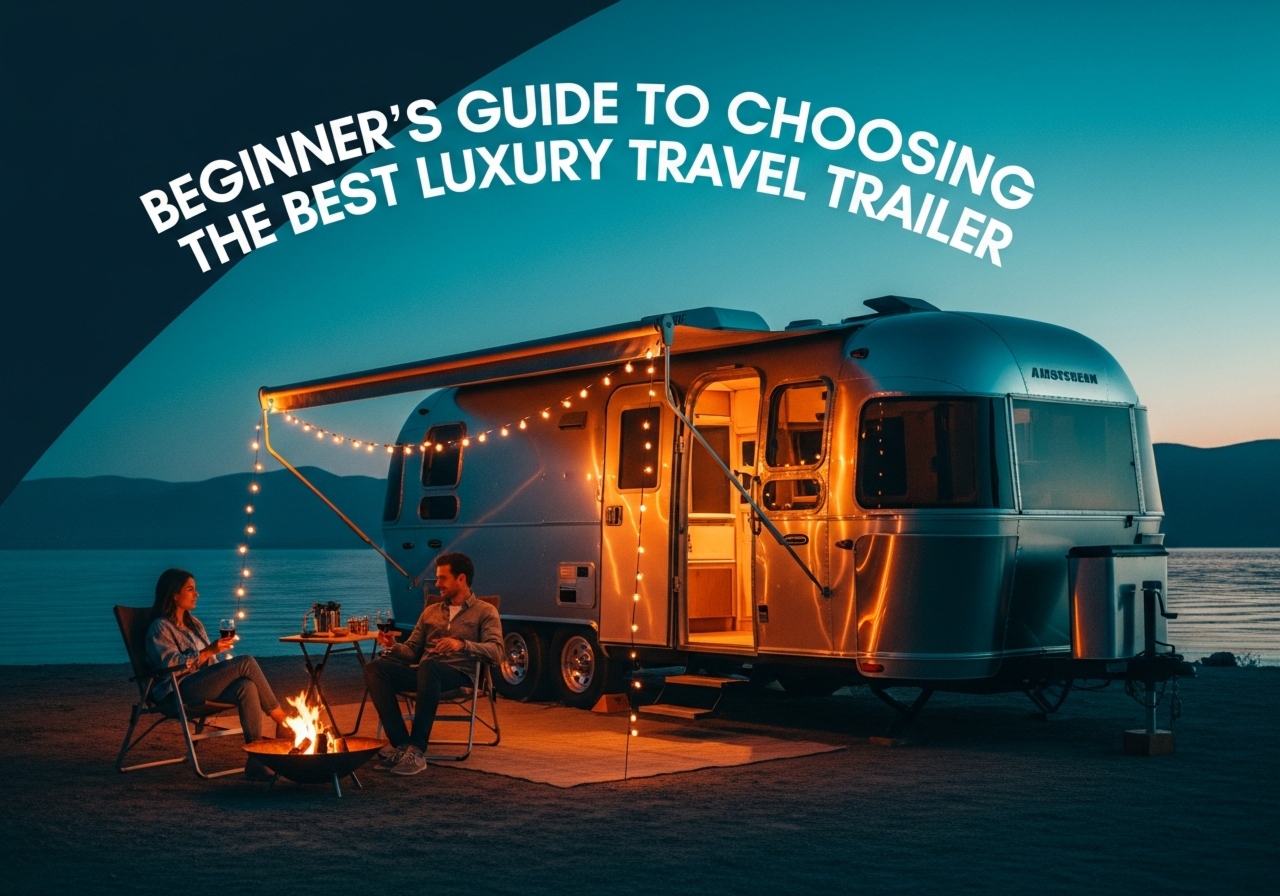
Have you been carrying the same small, careful dream for a while — the one where you set out early on a bright morning, coffee steaming, and arrive that evening at a place you did not know but somehow belong to?
Beginner’s Guide To Choosing The Best Luxury Travel Trailer
You will find yourself attentive to small things when you start looking for a luxury travel trailer. Notice how a handle feels in your hand. You will imagine a child’s laughter echoing in a hallway that retracts. Always make lists, and you will change them. This guide is written to be with you — practical, truthful, and soft around edges — as you take steps toward buying a trailer that will carry your days and nights.
Why choose a luxury travel trailer?
You want comfort without surrendering mobility. You want a place that feels like home but moves when you do. Luxury means different things to different people: refined materials, spacious layouts, premium systems, better insulation, or just the sense that your things have a rightful place. Luxury in a travel trailer often translates to durability, better resale, and a quieter sleep. It will also mean a higher price and more responsibility.
Who is this guide for?
This guide is for you if you are new to trailers and are considering a model that offers more comfort and convenience than basic campers. You may be a couple who plans long weekends and cross-country trips, a family seeking occasional living space on the road, or someone who intends to winter in mild climates. Whatever your situation, the questions here are for you.
How to use this guide
Read it as you would read a friend’s letter. Pick the sections that matter to you. Use the checklists. Keep notes. Return when you need to remind yourself of measurements or questions to ask a seller.
Understand the categories: What is a luxury travel trailer?
You will first need to know what counts as “luxury.” It is not simply a brand name or a glossy brochure. Luxury travel trailers usually include higher-quality finishes, more thoughtful layouts, advanced climate control, soundproofing, top-tier appliances, and stronger chassis and axles.
Types and sizes
There are several styles and sizes that often carry luxury trim. Each has strengths and compromises.
- Travel Trailers: Towable by a variety of vehicles; come in compact to large sizes. Luxury travel trailers often feature residential-style kitchens and multiple slide-outs.
- Fifth-Wheels: Connects to a pickup’s bed. They provide vertical space and are common in luxury models because of ample living areas.
- Toy Haulers: Have a garage area; luxury versions have comfortable living quarters combined with a strong frame.
- Ultra-Light Luxury: Smaller trailers that use advanced materials to combine convenience and high-end finishes.
Use the table below to compare common luxury trailer types.
| Type | Typical Length | Tow Vehicle | Luxury Traits | Best For |
|---|---|---|---|---|
| Travel Trailer | 20–40+ ft | SUVs, trucks | Slide-outs, residential kitchens | Those who want balance of towability and comfort |
| Fifth-Wheel | 25–45+ ft | Heavy-duty trucks | High ceilings, master suites | Long-term travelers and full-timers |
| Toy Hauler | 20–40 ft | Trucks | Garage space, reinforced frames | Adventurers who bring ATVs, bikes |
| Ultra-Light Luxury | 15–25 ft | Mid-size SUVs | Lightweight materials, upscale interior | Solo travelers/couples who tow with smaller vehicles |
Set your priorities: Questions you must answer
You will be clearer if you begin with questions. Write them down and answer them honestly.
- How many people and pets will usually travel with you?
- How many nights will you spend in the trailer each trip?
- Do you intend to full-time, seasonal, or weekend-camp?
- What climates will you encounter — winter cold or desert heat?
- How important is off-grid capability (solar, battery, generator)?
- What is your tow vehicle or what can you afford to buy to tow?
- Do you want high-end finishes or simply the comforts of a large, well-equipped trailer?
Your answers will shape every choice after.
Budgeting: The real cost
Luxury costs more. But there are many parts to the cost beyond the sticker price. You will need to consider:
- Purchase price (new vs used)
- Taxes, title, registration
- Tow vehicle purchase or upgrades
- Insurance
- Maintenance and repairs
- Depreciation
- Storage fees
- Fuel and campground fees
- Accessories (hitches, awnings, leveling systems)
Below is a typical cost range to give you a reference. These are approximations and will vary by brand, condition, and region.
| Category | Typical Range |
|---|---|
| Entry-level luxury travel trailer (used/new) | $35,000 – $60,000 |
| Mid-level luxury (new) | $60,000 – $100,000 |
| High-end luxury / Fifth-wheel | $100,000 – $250,000+ |
| Insurance (annual) | $500 – $2,000+ |
| Storage (monthly) | $50 – $300 |
| Maintenance & repairs (annual) | $500 – $2,500 |
| Upgrades (solar, batteries, inverter) | $2,000 – $20,000 |
Towing: Know your vehicle and limits
You will need to pay serious attention to towing limits. A trailer’s weight is not a single number — there are dry weight, GVWR (Gross Vehicle Weight Rating), and cargo carrying capacity. Understand these terms.
- Dry Weight: Weight of the trailer without fluids, cargo, or passengers.
- GVWR: Maximum allowable weight of the trailer fully loaded.
- GAWR: Gross Axle Weight Rating — maximum weight per axle.
- Tongue Weight / Pin Weight: Downward force at the hitch; crucial for safe towing.
- Curb Weight of Tow Vehicle: The vehicle’s weight without passengers/cargo.
- Tow Rating of Vehicle: Maximum trailer weight the vehicle can tow.
You must ensure your tow vehicle’s tow rating exceeds the trailer’s GVWR and that payload capacity covers tongue weight. If you are unsure, visit a dealer or use a certified weigh station.
Tow equipment
You will need the right hitch, brake controller, and possibly a weight-distribution hitch. Luxury trailers are heavier and often benefit from sway control and upgraded brakes.
Layouts and floorplans: What will you actually live in?
You will spend mornings and nights inside this space. Look at floorplans and imagine ordinary moments.
- Kitchen: Do you want a residential fridge, oven, or gas cooktop? Is counter space important? Storage for groceries?
- Bathroom: Full bathroom with separate shower, stacked washer/dryer options, amount of storage.
- Bedroom: Walk-around beds, king vs queen, storage beneath bed.
- Living Area: Sofa, theater seating, dinette, convertible beds.
- Storage: Interior closets, exterior pass-through storage.
- Workspace: Do you need a desk or flexible space for work?
Slide-outs and their trade-offs
Slide-outs increase living space but add mechanical complexity and potential maintenance issues. Consider how slide-outs affect insulation and structural integrity in winter conditions.
Build quality and materials: Look inside the walls
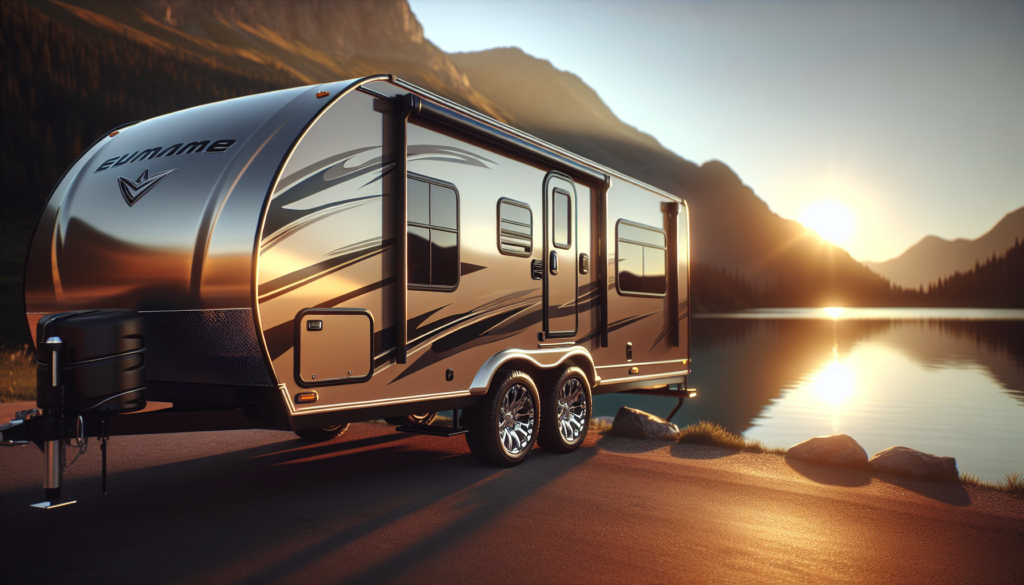
Luxury is often about what you do not see immediately. The framing, insulation, seals, and the quality of cabinetry matter.
- Frame and Chassis: Aluminum vs steel frames. Steel is durable but heavier; aluminum resists corrosion.
- Exterior Materials: Fiberglass, aluminum, laminated walls. Fiberglass can be lighter and more attractive; laminated walls are common but can trap moisture.
- Insulation: Look for high R-values and heated underbellies if you winter camp.
- Windows and Seals: Double-pane windows are quieter and more energy-efficient.
- Flooring and Surfaces: Solid-surface counters, hardwood or vinyl plank flooring vs cheap linoleum.
Systems that matter: HVAC, electrical, plumbing
You will want systems that are reliable and serviceable.
- Heating and Cooling: Dual-zone thermostats, efficient furnaces, heat pumps, powerful AC units.
- Electrical: 30A vs 50A service, inverters, battery bank, solar readiness.
- Hot Water: Tankless water heaters offer endless hot water but require more power.
- Plumbing: Winterization features, quality water lines, and accessible tanks.
- Generators: Quiet generators are a luxury that frees you from hookups.
Off-grid capability
If you plan to boondock, prioritize solar panels, lithium batteries, efficient appliances, and larger freshwater tanks. Consider an inverter that can handle coffee makers and microwaves.
Comfort and luxury features to seek
These features give a place the feel you want.
- Residential appliances (stove, fridge, washer/dryer)
- Heated floors
- Fireplace
- King bed with good mattress
- High-end upholstery and window treatments
- Soft-close cabinets and solid doors
- Integrated sound systems and smart controls
- Large panoramic windows
- High ceilings in fifth-wheels or tall trailer designs
Inspecting a used trailer: Checklist
If you look at used trailers, you will want to move like someone who expects to find small betrayals in time. Bring a checklist and a mechanic if you can.
- Exterior: Look for soft spots, delamination, signs of repairs, cracks in fiberglass.
- Roof: Inspect seams, vents, and any patches. Ask for maintenance records.
- Undercarriage: Check for rust, bent frames, missing bolts.
- Tires and Wheels: Check age (DOT code), tread depth, and signs of dry rot.
- Slide-out Operation: Look for smoothness, seals, and water damage around openings.
- Interior: Smell for mold or mildew. Test appliances, faucets, lights.
- Electrical: Test outlets, battery condition, converter, inverter.
- Propane System: Inspect tanks and lines. Ask for recent inspections.
- Axles and Brakes: Check for uneven wear, proper function.
- Water Systems: Check freshwater, grey, and black tanks for leaks; run water everywhere.
- Title and Paperwork: Ensure no liens, accurate VIN, and maintenance receipts.
Professional inspection
You should strongly consider a professional 3rd-party inspection. A trained technician can find issues you might not see.
New vs Used: Advantages and trade-offs
You will choose between new comfort and used economy.
- New: Full warranty, latest features, customization, no hidden history. Higher cost and faster initial depreciation.
- Used: Lower price, slower depreciation, but possible deferred maintenance and older technology.
If you decide on new, negotiate on options and consider dealer add-ons carefully. If used, have a budget for immediate maintenance.
Warranty and service
You will be grateful for a good warranty. Understand what is covered and for how long. Check where service centers are located; luxury trailers with complex systems will need support.
Brand reputation and owner communities
You will learn a lot by listening to owners. Forums and owner groups can tell you about long-term issues and regional concerns. But remember that people report extremes; look for patterns.
Practical checks at the dealership
When you visit, bring a tape measure, your checklist, and your tow-ball weight info. Spend an hour in a floorplan, sitting, opening cabinets, and lifting drawers. Take photos and notes.
Safety and legal considerations
You will need to comply with laws and feel safe on the road.
- Driver Licensing: Check if your license and local laws allow towing what you plan to tow.
- Weight Distribution and Brakes: Ensure brakes are functioning and properly adjusted.
- Breakaway System: Required by law in many places — prevents runaway trailers.
- Fire Safety: Check smoke and CO detectors, fire extinguishers, and propane alarms.
- Lighting: All lights must be functional and visible.
Storage and campground logistics
You will need a plan for where to keep the trailer when not in use. Some campgrounds will not accept large or wide trailers. National and state parks may have length limits. Find the campgrounds you want and check their rules early.
Insurance and registration
You will insure the trailer as property. Discuss with your insurer about full replacement value and roadside assistance. Consider gap insurance if you finance.
Maintenance schedule: Keep it lovely and functional
You will preserve value with routine maintenance. Small things undone become big things later.
| Task | Frequency |
|---|---|
| Roof inspection and sealant check | Twice a year |
| Tire inspection and rotation | Every 6 months or 6,000 miles |
| Wheel-bearing repack | Every 2 years or 12,000 miles |
| Propane system check | Annually |
| Battery maintenance (flooded) or software check (lithium) | Monthly/seasonal |
| Exterior wash and wax | Twice a year |
| Slide-out seals and lubrication | Every 3 months |
| Appliance servicing | Annual |
| Winterization/de-winterization | Annually, as needed |
Living tips: Making a luxury trailer feel like home
You will have small rituals that make the trailer yours. Bring tactile items, low-profile storage boxes, and routines that preserve space.
- Use hooks and Velcro for secure storage.
- Choose collapsible items that stow easily.
- Keep a minimal wardrobe seasonally rotated.
- Use slipcovers on sofas for easier cleaning.
- Have a small toolkit and spare parts kit (fuses, bulbs, propane regulator).
Sustainability and energy choices
You will think about energy. Solar and lithium batteries make luxury trailers self-reliant and quieter. Energy efficiency extends your off-grid days and reduces generator use.
- Solar panels: Output depends on panel area, sun exposure, shading.
- Batteries: Lithium offers longevity and depth of discharge.
- Inverters: Ensure enough wattage for your major appliances.
- LED Lighting: Saves power and reduces heat.
Financing and buying strategy
You will likely finance. Shop rates and loan terms like any major purchase. Consider total cost of ownership. Negotiate on extras and check incentives.
- Compare manufacturer financing vs bank/credit union loans.
- Consider down payment size and monthly payment goals.
- Read the purchase contract for add-ons and protection plans.
Accessories and upgrades usually worth it
These tend to be the most useful and have lasting value.
- Quality weight-distribution hitch and sway control
- Backup camera and integrated sensors
- Upgraded battery bank (lithium if budget allows)
- Solar package that fits your usage
- Tire-pressure monitoring system (TPMS)
- Leveling system (automatic or electric jacks)
- Slide-out awning or entry-step upgrades
Common mistakes beginners make
You will avoid regret if you heed others’ lessons.
- Buying the biggest trailer you can afford without considering tow vehicle or daily living needs.
- Ignoring weight specs and overloading.
- Skipping a professional inspection on a used unit.
- Focusing only on cosmetics, not on structural or mechanical health.
- Buying expensive options that add little to your actual comfort.
Decision checklist: Are you ready?
Before signing, answer these:
- Does the trailer meet your sleeping, cooking, and storage needs?
- Is your tow vehicle rated for the GVWR? If not, can you afford an upgrade?
- Have you inspected the roof, undercarriage, and slide-outs?
- Have you tested electrical, propane, plumbing, HVAC, and appliances?
- Do you understand ongoing maintenance and costs?
- Is there warranty and local service support?
- Have you compared financing and insurance costs?
If you can answer yes to most of these, you are close to a confident purchase.
How to test on the road
When you take a trailer on a short trip, pay attention to everyday motions. How does it handle in wind? How does it set up at a campsite? Do systems respond to changes (fridge switching from gas to electric, water pump noise)? Sleep two nights in it before committing, as you will learn about soundproofing, mattress comfort, and storage functionality.
After purchase: Settling into ownership
You will have a few anxious days and then a slow, enjoyable settling. Keep records of every maintenance task. Learn the little sounds and the way the trailer breathes. You will find routines that make setup fast and enjoyable.
- Create a binder or digital folder with manuals and receipts.
- Keep a mileage and maintenance log.
- Make a list of must-have aftermarket parts you want to add slowly.
Frequently asked questions
You will likely ask these as you go forward.
- Q: How much can I tow with an SUV? A: Check your vehicle’s tow rating in the owner’s manual. Many luxury trailers need trucks; ultra-light models can be towed by SUVs.
- Q: Is a fifth-wheel better than a travel trailer? A: Not better in all ways. Fifth-wheels offer more interior space and stability but require a truck and have limitations at some campsites.
- Q: How long will a luxury travel trailer last? A: With proper care, 10–20 years is possible. Quality materials and regular maintenance extend life.
- Q: Is it cost-effective to buy new? A: New gives peace of mind and warranty. Used saves money but requires inspection and potential immediate maintenance.
Final thoughts
You will find that buying a luxury travel trailer is partly a technical transaction and partly a slow, personal choosing. You will be buying not just an object but a set of possibilities. The trailer will be a vessel for quiet mornings and for returning dust and stories. Attend to the details. Let comfort mean durability and good systems, and remember that luxury is often the way things work when you need them to.
Keep your lists. Be patient with dealers and yourself. Sit inside a few times, even in silence. If you treat the choice like you would choose a good roommate, you will do well.